
Chimney Repairs in Telford
Chimney stacks take the full force of the weather and get looked at the least. Mortar washes out, the cement on top cracks, the lead lifts, and water finds its way into a bedroom wall or the loft. Across Telford there are two very different kinds of stack to deal with: tall Victorian ones on the older streets, and stacks on estate houses that may not have carried smoke for years. Tell us about yours and we will pass it to an independent roofing firm that does chimney work locally.
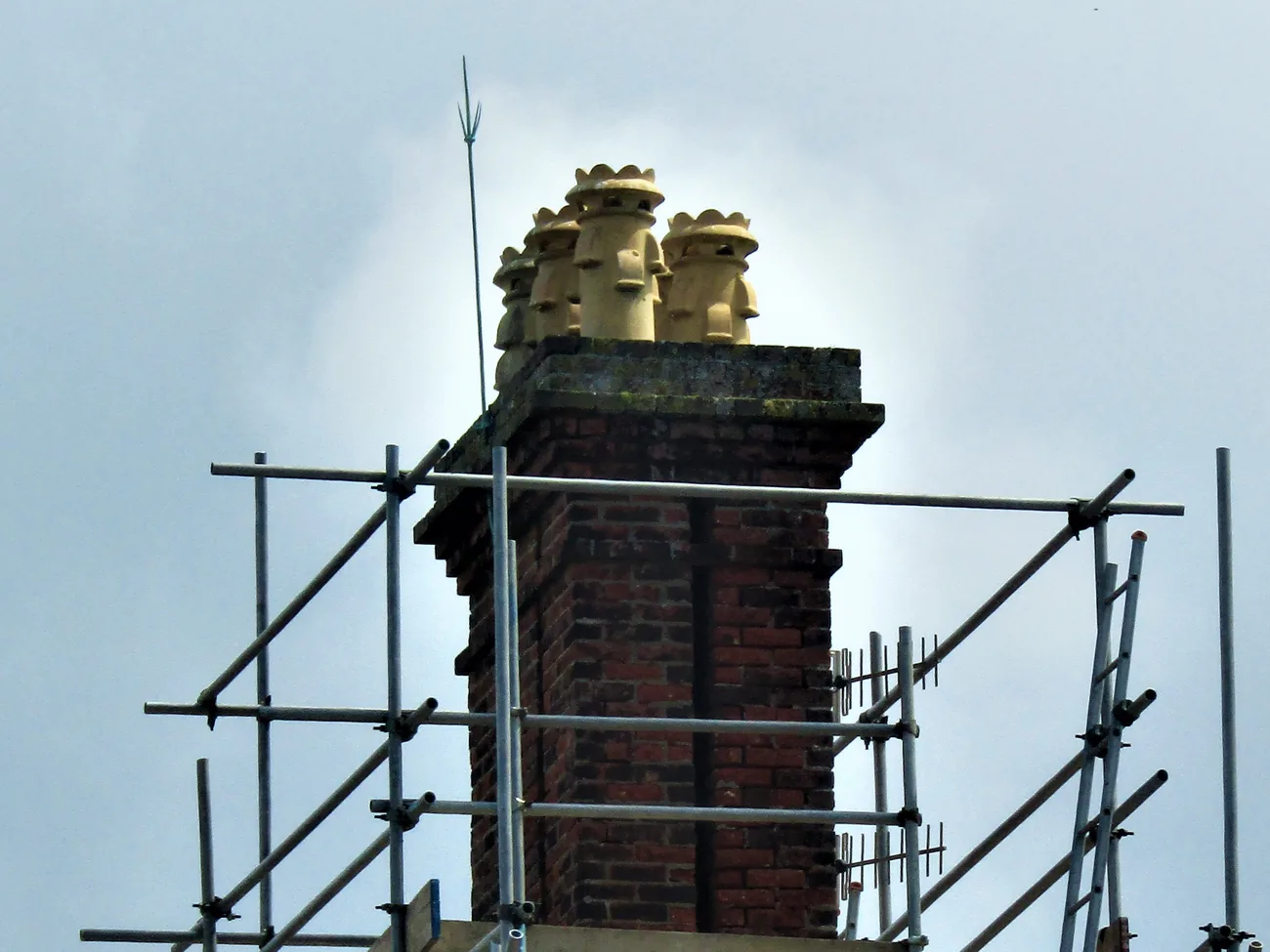
Signs a Chimney Needs Work
- Gaps in the mortar between bricks, or sand and grit collecting in the gutter below.
- Damp patches on a chimney breast or the ceiling beside it, often worse after driving rain.
- Lead around the base of the stack lifted, cracked or smeared over with sealant.
- Cracked cement on the top of the stack, or a pot that leans.
- A stack that looks out of line when viewed from the road.
Repointing
Repointing means raking out tired mortar and filling the joints with fresh mortar. On a stack it is one of the most common jobs and one of the most useful, because loose joints let water into the brickwork and, in time, loosen the bricks themselves. The mix matters. Older brick stacks were built with softer lime-based mortar, and a hard modern cement mix can trap moisture and damage the brick faces. A roofer working on a Victorian stack should be able to explain the mix they plan to use.
Lead Flashing Around the Stack
Where the stack passes through the roof, lead is dressed around it to keep water out: an apron across the front, stepped pieces up the sides and a back gutter behind. When the lead cracks, or the mortar holding it into the brickwork falls out, water runs straight down inside. Replacing a sealant bodge with properly dressed lead is often the repair that finally stops a leak that has been "fixed" several times.
Flaunching and Capping
The flaunching is the sloped layer of mortar around the pots on top of the stack. It throws water off and holds the pots in place. Once it cracks, rain gets into the core of the stack. Re-flaunching is a common repair. Where a flue is no longer used, the pot can be capped with a ventilated cap to keep rain and birds out while still letting air move through.
Removing a Redundant Stack
On many estate houses the chimney hasn't been used since a boiler replaced the fire. A stack that does nothing still needs maintaining, so some owners choose to take it down instead. The usual job is to take the stack down below the roof line, fit new battens, felt and tiles to match, and tie the new section into the surrounding roof so there is no weak spot. In the loft, the remaining brickwork is capped and made good, and the old flue is usually vented so moisture does not build up inside it.
Two things to raise at the quote. First, if the stack is shared with a neighbour on a semi or terrace, talk to them before anything comes down. Second, taking out a chimney breast inside the house is structural work and a separate job, so ask whether building control will be involved before it is touched.
Victorian Stacks in the Older Towns
Telford grew around older towns, and Wellington, Oakengates and Madeley still have plenty of Victorian terraces and villas with tall brick stacks, clay pots and years of repairs layered on top of each other. These often need scaffold, careful repointing and sometimes a rebuild of the top courses. Wellington is one of Telford & Wrekin's conservation areas, so if a visible stack there is to be altered or taken down, ask the council's conservation team first.
Chimneys in the Ironbridge Gorge
In the Ironbridge Gorge, chimney alterations can need permission. Ask Telford & Wrekin Council first, before taking down, rebuilding or changing a stack, especially where the house faces a road, the river or open space. For houses on the south bank, in Jackfield or Broseley, ask Shropshire Council instead. Our page on heritage roofs explains how the Gorge is split between the two councils.
Our scope. We match chimney repair and removal work. We don't match chimney sweeping enquiries, which is a different trade.
What Changes the Price
Access. A single-storey stack may be reached from a tower. A tall stack on a two- or three-storey house usually needs scaffold, which can be the largest part of the cost.
How much needs doing. Repointing only the top courses is less work than the whole stack, and rebuilding loose brickwork is more again.
Removal and making good. Taking a stack down includes retiling the roof and finishing the loft side.
Consent. In a conservation area or the Gorge, agreeing the work with the council can add time.
Our guide to roof repair costs gives typical UK ranges for repair work, and explains why access moves a quote so much.
How It Works
Tell us what the chimney is doing, whether it is still in use, and roughly how tall the house is. We pass the details to an independent roofing firm covering your area, and they arrange a visit and a quote. We don't do chimney work, and we don't inspect, approve or check the firm. Free, with no obligation, and enquiries outside working hours get a call back the next working day.
Related Services
If the stack is being dealt with, it is a good time to look at the tiles around it under roof repairs. A full re-roof is the cheapest moment to take a redundant stack down: see roof replacement. Damp near a chimney can also come from a blocked gutter, covered in guttering, fascias and soffits.
Areas We Cover
Chimney repairs across Wellington, Oakengates, Madeley, St Georges & Trench, Ironbridge & Coalbrookdale and Shifnal, and every other area we cover. see all service areas
Common Questions
Is it worth removing a chimney I don't use?
Often, yes, if it needs work anyway. A redundant stack still needs repointing and flashing to stay watertight. Taking it down below the roof line removes that upkeep, but the roof has to be tiled in properly and the loft side made good.
Why does my chimney breast get damp after rain?
The usual causes are failed lead flashing at the base of the stack, open mortar joints, cracked flaunching on top, or an uncapped pot letting rain down the flue. A roofer will usually check all four.
Do I need permission to take down a chimney?
Often not, but it depends where you live. In a conservation area or the Ironbridge Gorge, ask the council first. If the stack is shared, talk to your neighbour before any work starts.
Get a Free Quote for Chimney Repairs
Say where the house is and what the roof is doing. A roofing firm covering your part of Telford looks, quotes and deals with you direct.